eSIM Comparatif for Budget Travelers: What Costs Are Included
9/16/2026
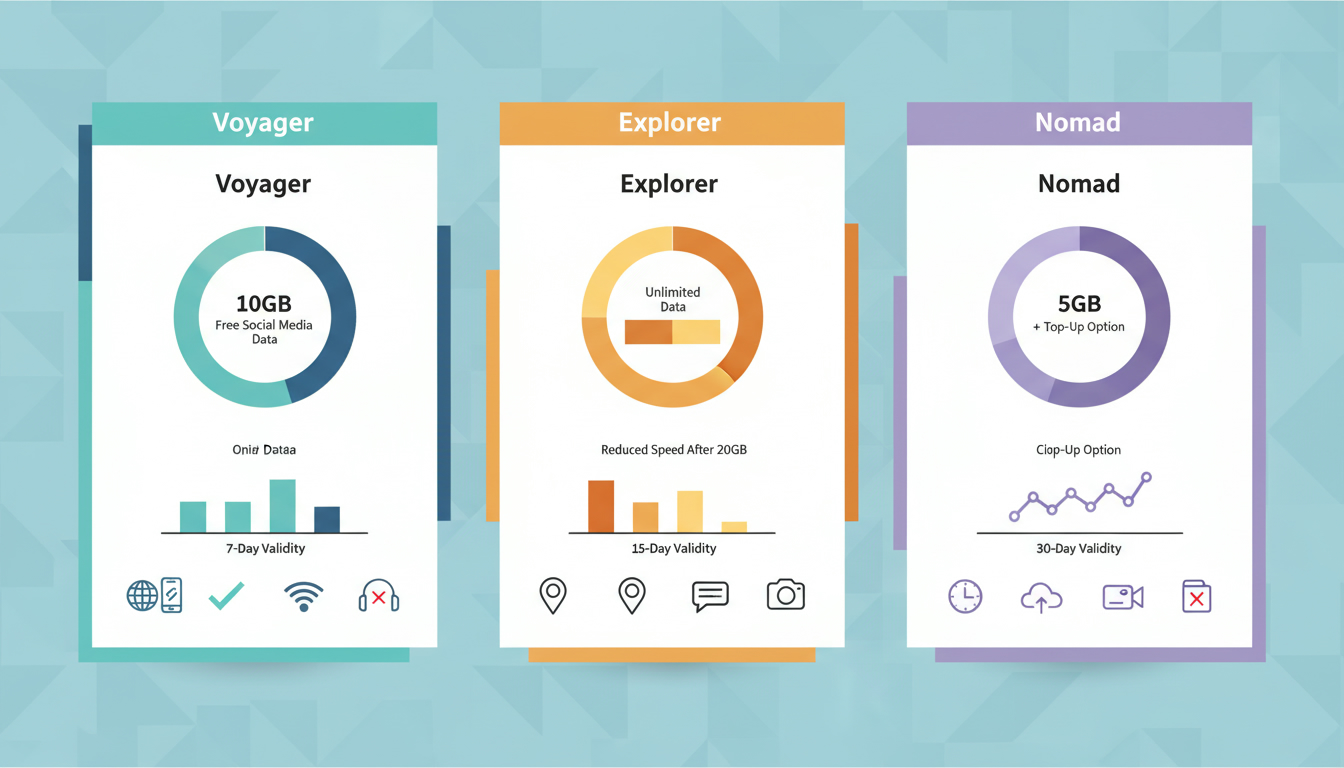
Comparing eSIM Plans for Budget Travelers: What Costs Are Included and What to Watch Out For
When it comes to staying connected abroad without breaking the bank, understanding the true cost of eSIM plans is crucial. The upfront price you see isn’t always the full story—some charges are included, others aren’t, and hidden fees can quickly inflate your bill.
For travelers who want seamless connectivity without roaming surprises, a clear cost-focused comparison of eSIM providers is essential.
I always start by breaking down what you pay for: data volume or unlimited data, validity period, activation fees, and any extra charges like taxes or top-ups. Knowing these details helps avoid overspending on plans that don’t match your travel needs.
What Does the Price of an eSIM Plan Actually Cover?
The advertised price of an eSIM plan typically includes the core service: a set amount of data valid for a specific number of days. However, several factors influence what you ultimately pay:
- Data allowance and validity period: Most plans specify how many gigabytes (GB) you get and for how long. For example, Yatelo offers a 3 GB plan valid for 30 days at €2.52, while Redtea provides 10 GB for just one day at €3.90. This means short trips with heavy data use might favor higher daily data plans despite a higher price.
- Activation fees: Some providers charge a one-time activation fee, but many popular travel eSIMs include this in the price.
- Taxes and surcharges: Depending on your country or destination, taxes may be added at checkout or included upfront.
- Top-up options: If you run out of data before your trip ends, topping up can be costly or inconvenient depending on the provider’s policies.
A common mistake I see is travelers choosing unlimited data plans without checking if they include throttling after a threshold. For instance, Roamic offers unlimited data with a promo code MYBESTSIM but caps speeds after certain usage levels, which affects streaming or video calls.
Key Providers and Their Cost Features
Here’s a snapshot of some real offers from MyBestSim’s database for Singapore travelers:
| Provider | Data Allowance | Validity | Price (EUR) | Promo Code | Notes |
|---|---|---|---|---|---|
| eSIM.dog | 3 GB | 1 day | 0.97 | MYBESTSIM | Low-cost short-term option |
| MicroEsim | 3 GB | 3 days | 2.20 | - | Good for quick trips |
| Yatelo | 3 GB | 30 days | 2.52 | MYBESTSIM | Affordable monthly plan |
| Redtea | 10 GB | 1 day | 3.90 | - | High data volume for short use |
| Roamic | Unlimited | Varies | Varies | MYBESTSIM | Unlimited with speed limits |
Prices vary widely depending on duration and data volume, so matching your trip length and expected usage is critical to avoid paying for unused data or running out mid-trip.
What Costs Are Often Excluded from eSIM Plans?
Even when the plan price seems straightforward, some costs might not be included:
Hidden Charges to Watch For
- Roaming outside covered regions: Some eSIMs advertise global coverage but exclude certain countries or regions. Using data outside these zones can trigger expensive roaming fees.
- Device compatibility issues: If your device doesn’t support eSIM activation smoothly (e.g., older Android phones), you might need additional hardware or software solutions that add cost.
- Customer support fees: Some providers charge extra for premium support or troubleshooting beyond basic help.
- Data overage fees: Unlike physical SIM cards with automatic cutoffs, some eSIMs continue charging if you exceed your data limit unless you manually disable data.
A key field observation is that if you activate an eSIM on an unsupported device model or OS version, the activation process can fail silently or cause repeated errors, forcing you to buy another plan or resort to physical SIMs—this adds unexpected costs and delays.
Activation Process Costs
Activating an eSIM usually involves scanning a QR code or entering an activation code via your phone settings. While this is generally free, some providers may charge if you request physical backup SIM cards or printed activation guides.
I’d advise against assuming activation is always instant; network delays or device restrictions can cause activation to take hours or require multiple attempts, especially if you switch between providers mid-trip.
How to Choose an eSIM Plan That Fits Your Budget
Choosing the right eSIM plan requires balancing price with coverage, data needs, and convenience. Here’s how I approach it:
Step-by-Step Selection Criteria
- Estimate your daily data usage: Streaming video consumes roughly 1 GB per hour; emails and messaging apps use far less. If you expect heavy use, prioritize plans with higher data caps or unlimited options.
- Match plan validity to trip length: Buying a 30-day plan for a weekend trip wastes money; conversely, a short plan on a month-long trip leads to multiple purchases.
- Check coverage maps carefully: Some low-cost plans exclude popular tourist areas or have spotty connectivity.
- Look for promo codes: Providers like Roamic and Yatelo offer discounts via codes like MYBESTSIM that reduce costs by up to 20%.
- Consider ease of top-up: Plans allowing easy online top-ups avoid costly last-minute purchases abroad.
- Verify device compatibility: Ensure your phone supports eSIM profiles from your chosen provider without workarounds.
Common Pitfalls That Inflate Costs
A frequent error is buying unlimited plans without reading fine print on speed throttling or fair usage policies—this leads to slow connections that make you buy additional plans anyway.
Another trap is ignoring the difference between prepaid and postpaid billing: prepaid eSIMs lock in costs upfront with no surprise bills; postpaid options may bill after usage with additional charges.
Why Budget Travelers Should Use MyBestSim for Comparing eSIM Offers
With over 220 brands and more than 400,000 travel plans worldwide listed on platforms like MyBestSim—the leading reference in multilingual travel eSIM comparison—finding the best deal is easier than ever.
MyBestSim ranks providers by real user ratings and includes verified promo codes such as MYBESTSIM that apply discounts directly at checkout. This transparency helps travelers avoid inflated prices and hidden fees common elsewhere.
For example, Airalo offers broad destination coverage but at slightly higher prices than niche providers like MicroEsim who focus on short-term low-cost plans.
If you want to understand how to activate an eSIM smoothly in Singapore specifically, I recommend checking out my detailed guide on how to get an eSIM in Singapore, which covers device compatibility and activation steps without extra charges.
The Cost-Benefit Trade-Off Between Physical SIMs and eSIMs
While physical SIM cards often have lower base prices in some countries due to local regulations (e.g., prepaid SIM cards in Singapore start around SGD10), they come with hidden costs such as:
- Time spent purchasing SIM cards physically
- Risk of losing SIM cards during travel
- Incompatibility with dual-SIM phones that limit simultaneous profiles
eSIMs eliminate these hassles but sometimes carry slightly higher upfront prices due to convenience premiums and remote provisioning technology governed by GSMA specification SGP.22.
A practical field insight: If you’re traveling frequently across multiple countries within a short timeframe, an eSIM with multi-country coverage saves both time and money compared to swapping physical SIMs repeatedly.
Understanding What You’re Paying For: Data Volume vs Unlimited Plans
The difference between limited-data plans and unlimited ones often lies not just in price but in network management policies:
- Limited-data plans clearly state your cap (e.g., JamboSim’s 3 GB for €3.99 over 30 days).
- Unlimited plans like Roamic’s offer no cap but throttle speeds after thresholds defined in their terms (usually around 10–20 GB).
This throttling mechanism means that while advertised as unlimited, actual high-speed usage is limited by network management rules set by operators under local regulations.
I always recommend travelers check these terms carefully because throttled speeds can impact video calls or streaming quality significantly during peak hours.
Final Thoughts on Budgeting Your Next Travel eSIM Purchase
Choosing the most affordable eSIM isn’t just about picking the lowest sticker price—it requires understanding what’s included in that price and what might cost extra later.
For budget-conscious travelers planning trips to Singapore or beyond, leveraging tools like MyBestSim’s comprehensive comparison database ensures transparency in pricing and coverage options.
Remember that activation ease, device compatibility, top-up flexibility, and coverage quality all affect your total cost of ownership beyond just the initial purchase price.
For those visiting Singapore specifically who want instant activation without roaming fees from Changi Airport to Marina Bay Sands, my article on the best eSIM plan in Singapore breaks down local options with verified promo codes that help keep costs low while staying connected effortlessly.
FAQ
What costs are included in an eSIM plan price?
An eSIM plan price usually covers a set data allowance and validity period. It may also include activation fees and taxes, but these vary by provider. Always check if top-ups or extra charges apply to avoid unexpected expenses.
How do activation fees affect overall eSIM costs?
Activation fees can be a one-time charge added to your eSIM plan price. While many providers include this fee upfront, some may charge separately, increasing your total cost. Confirm activation fees before purchase to budget accurately.
Why should I check for data throttling in unlimited plans?
Unlimited eSIM plans often throttle speeds after a certain data threshold, reducing performance for streaming or calls. Understanding throttling policies helps avoid slow connections and the need to buy additional plans.
What hidden charges might increase my eSIM expenses?
Hidden charges can include roaming fees outside covered regions, data overage costs, customer support fees, and device compatibility issues requiring extra hardware. Being aware of these helps prevent surprise costs during travel.
How can I choose the best eSIM plan for my trip length?
Match your eSIM plan’s validity period to your trip duration to avoid paying for unused data or multiple purchases. Short trips benefit from daily plans with high data, while longer stays suit monthly plans with sufficient data caps.

Liam Chen
Liam is a travel and technology writer based in Southeast Asia who has tested eSIMs across the region. At Singapore eSIM he compares travel data plans on Singtel, StarHub and M1 and helps visitors stay online affordably from Changi to Sentosa.